
Prof. F. Richard Yu
School Info. Tech. and Depart. Systems&Computer Eng., Carleton University
FIEEE, FRSC, FCAE, MAE, FEIC, FIET, PEng, PhD
Speech title: Intelligence Networking for Agentic and Physical AI Systems
Abstract: As AI systems become increasingly agentic — capable of autonomous planning and action — and increasingly physical, embodied in connected and autonomous vehicles, robots, and industrial agents, networks must coordinate intelligence itself, not just data. Intelligence Networking treats intelligence as a first‑class networked resource, enabling predictive analytics, autonomous decision‑making, and adaptive physical systems that respond dynamically to changing conditions. This talk examines the architectures and protocols needed to realize this paradigm with different applications. The paradigm is grounded theoretically in Intropy, a novel framework for modeling intelligence from the presenter's recent book, which formalizes intelligence gain as information flow moderated by resistance.
Bio: F. Richard Yu obtained his PhD in Electrical Engineering from the University of British Columbia (UBC). His research interests include intelligent and autonomous systems, physical AI, IoT, and security/privacy. He has been consistently recognized as a Clarivate “Highly Cited Researcher,” Stanford “Top 2% Most Cited Scientist,” and ScholarGPS “Top 0.05% Highly Ranked Scholar” for several consecutive years. He has received several Best Paper Awards from first‑tier conferences, two Carleton Research Achievement Awards (2012 and 2021), and the Ontario Early Researcher Award in 2011. He is a Member of the Academia Europaea (MAE) and a Fellow of the Royal Society of Canada (FRSC), Canadian Academy of Engineering (CAE), the Engineering Institute of Canada (EIC), IEEE, and IET. He also serves as a Board Member of the IEEE Vehicular Technology Society and as an IEEE Distinguished Speaker.

Prof. Marco Gori
University of Siena, Italy
FIEEE, FEurAI, FIAPR, FELLIS, PhD
Speech title: Generative System Dynamics in Recurrent Neural Networks
Abstract: In this talk, I discuss an alternative view of learning from interaction, one that casts time in the leading role. I then show that this alternative path is a candidate to replace transformer‑based architectures in carrying out generative processes. The emphasis is on mechanisms that favor generative processes arising simply from the initial conditions of the neural network. I prove that linear units enable universal generation capabilities, which can be extended to piecewise‑linear units. Finally, I present evidence of the underlying symbolic structure that emerges from the proposed generation process.
Bio: Marco Gori received the Ph.D. degree in 1990 from Università di Bologna, Italy, working partly at the School of Computer Science (McGill University, Montreal). He is currently full professor of computer science at the University of Siena, where he is leading the Siena Artificial Intelligence Lab. He is mostly interested in Machine Learning with emphasis on Neural Computation. The impact of his research on neural networks emerged mainly from the growing interest in Graph Neural Networks. He introduced the first ideas in the paper “A New Model for Learning in Graph Domains”, by M. Gori, M. Monfardini and F. Scarselli (IJCNN2005) where the keyword Graph Neural Network was coined. A few years later, the most significant paper “Graph Neural Networks,”IEEE‑TNN, 2009 provided a more robust analysis and an accurate experimental evaluation. To date, the paper has received more than 14,000 citations (more than 8 citations/day in the last year). He has been the recipient of the Donald Hebb Neural Networks Award (INNS 2026). Professor Gori has been the chair of the Italian Chapter of the IEEE Computation Intelligence Society and the President of the Italian Association for Artificial Intelligence. He is a Fellow of IEEE, EurAI, IAPR, and ELLIS. He has received the Donald Hebb award from the International Neural Networks Society.
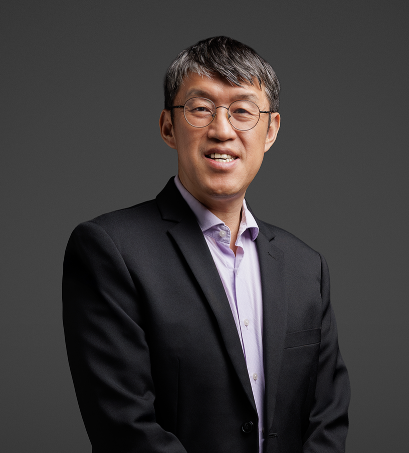
Prof. Xiaoli Li
Singapore University of Technology and Design (SUTD)
IEEE Fellow; Clarivate Highly Cited Researcher; Chair Professor & Pillar Head SUTD; Adjunct Prof NTU
Speech title: Design AI for Real‑World Applications: From Education and Industrial Intelligence to Embodied Robotics
Abstract: Computer Science and Artificial Intelligence create real‑world impact by learning from complex data, enhancing human decision‑making, and enabling reliable applications. This keynote presents a unified perspective on designing AI systems that bridge methodological advances with practical needs in education, industry, and robotics.
The first part explores AI‑enabled education, focusing on automated programming feedback and assessment. AI can analyse students’ code, identify learning difficulties, and provide personalised support, while addressing challenges from generative AI in evaluating learning outcomes.
The second part examines AI‑driven industrial intelligence, where representation learning from sensor data enables anomaly detection, equipment monitoring, predictive maintenance, and real‑time decision‑making to improve reliability and efficiency.
The final part discusses embodied AI and robotics, highlighting how intelligent systems integrate perception, sensor data, and interaction for applications such as underwater mapping, inspection, navigation, and adaptive robotics.
Through a Design AI perspective, this keynote emphasizes that impactful AI is not only about developing powerful models, but also about creating trustworthy, adaptive, efficient, and deployable systems that address real human, industrial, and societal needs.
Bio: Professor Xiaoli Li is the Kwan Im Thong Hood Cho Temple Chair Professor and Head of the Information Systems Technology and Design pillar at the Singapore University of Technology and Design (SUTD). He previously led the Machine Intelligence Department at A*STAR, where he built and directed Singapore’s largest AI and data science research group, comprising more than 130 scientists. He is also an Adjunct Full Professor at Nanyang Technological University and a Fellow of IEEE and AAIA.
His research interests span artificial intelligence, data mining, machine learning, and bioinformatics. He has published more than 400 peer‑reviewed papers, received over 40,000 citations with an h‑index of 95, and won more than ten best paper awards, including the DASFAA 10+ Year Best Paper Award. He currently serves as an Associate Editor of IEEE Transactions on Artificial Intelligence and ACM Computing Surveys and has held key leadership roles, including conference chair and area chair, at premier venues such as AAAI, IJCAI, ICLR, NeurIPS, KDD, and ICDM.
Professor Li also has extensive experience translating AI research into industrial applications. He has established multiple joint laboratories and led more than ten major R&D collaborations with global partners in aerospace, telecommunications, insurance, and professional services. He has been named a Clarivate Highly Cited Researcher and recognized among the world’s top 2% of scientists in artificial intelligence by Stanford University.